
THERMAL IMAGING DURING HOME INSPECTIONS
A closer look at temperature patterns, as part of your home inspection
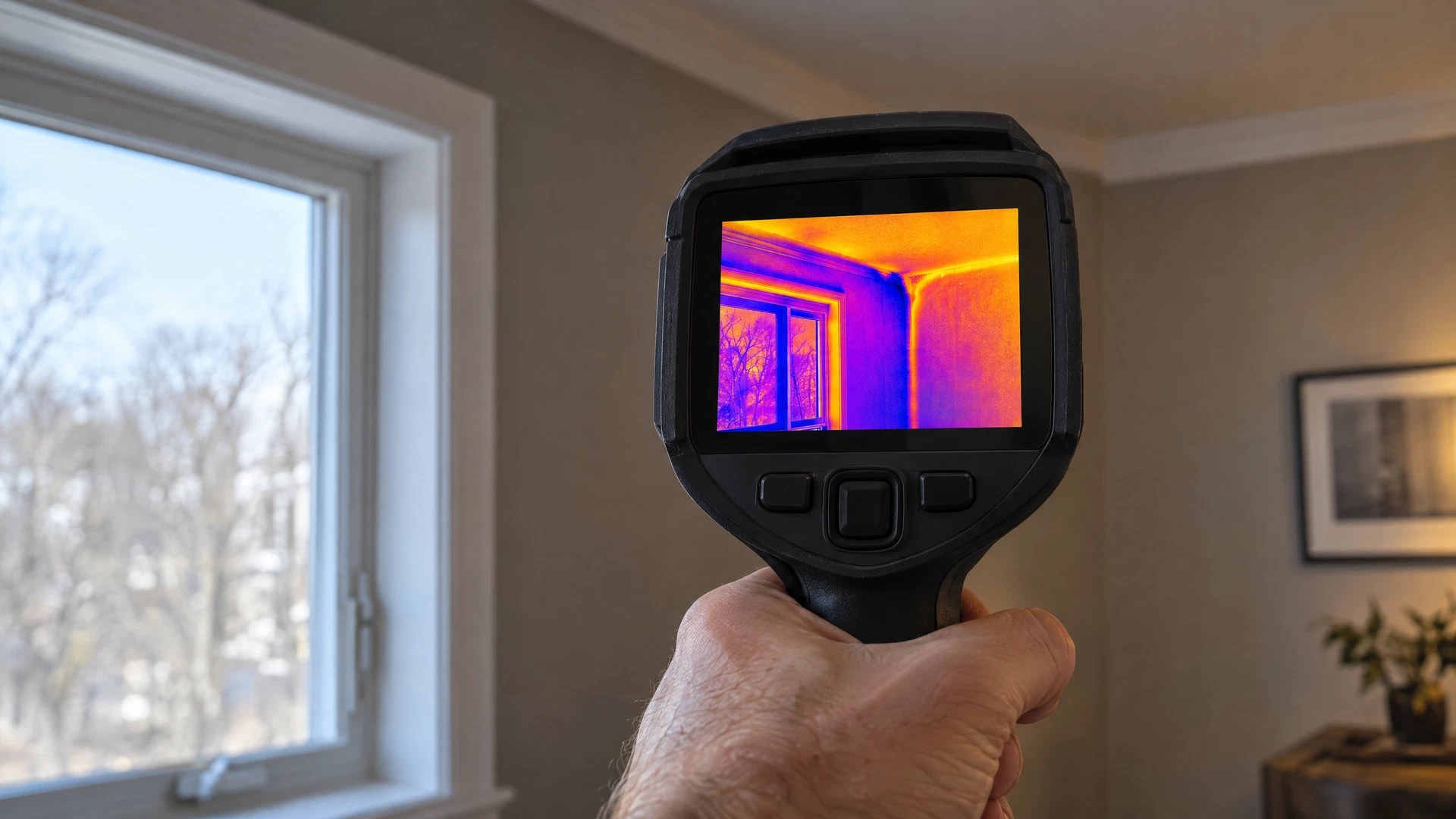
Thermal imaging during a home inspection can flag temperature patterns for closer review. It does not see through walls or confirm defects.
A closer look.
A useful answer.
A thermal camera displays differences in surface temperature. During a residential inspection, Derek uses it to notice patterns near areas such as ceilings, walls, windows, and HVAC registers that may deserve a closer look. A pattern can sometimes relate to moisture, insulation, air movement, or system performance, but the image alone cannot identify its cause or confirm a defect. Conditions also affect what the camera shows.
Thermal imaging is one tool within Royal Home Inspections' broader visual inspection, not a separate scan-only service. Derek considers patterns alongside visible conditions and may use a moisture meter. The report can explain observations and appropriate follow-up. A camera cannot see through walls, and no inspection method reveals every concealed condition.
Another way to notice clues
Temperature patterns can draw attention to accessible areas that look ordinary in visible light, including locations near ceilings, exterior walls, windows, or HVAC components.
Findings considered in context
A thermal image is a clue, not a diagnosis. Derek considers visible conditions and may use a moisture meter to assess whether a pattern merits reporting or further evaluation.
Time to explain what matters
Royal schedules one home inspection per day. Inspections typically take three to four hours, with five reserved. Derek discusses observations during a client walkthrough; photo-rich reports arrive the same day in most cases.
What we look at.
And what it tells you.
Inspection-time scanning
Thermal imaging is used during the residential inspection in safely accessible areas, not sold as a standalone scan or moisture-evaluation visit.
Visible and accessible conditions
The camera records surface temperatures, not what is behind finishes. The inspection does not involve opening walls, ceilings, or floors, or moving belongings to reach concealed areas.
Patterns require context
A warm or cool area alone does not prove a leak, insulation gap, air leak, or equipment defect. Conditions may limit comparisons; a concern may need another method or a qualified specialist.
No guarantee of detection
Thermal imaging supplements the visual inspection; it cannot identify every hidden issue or certify an area free of moisture or defects.
Can a thermal camera see through walls?
No. It displays temperature differences at visible surfaces, not behind drywall or finishes. A pattern may point to an area for closer attention but cannot show a concealed condition directly.
Does a thermal image confirm a water leak or mold?
No. Temperature variation has several possible causes. Derek considers accessible visual evidence and may use a moisture meter; further evaluation may be appropriate.
Can I book thermal imaging by itself?
No. It is a tool within the residential inspection, not a standalone service. Residential inspections start at $400; the exact quote depends on the property.
One home a day. Your full attention.