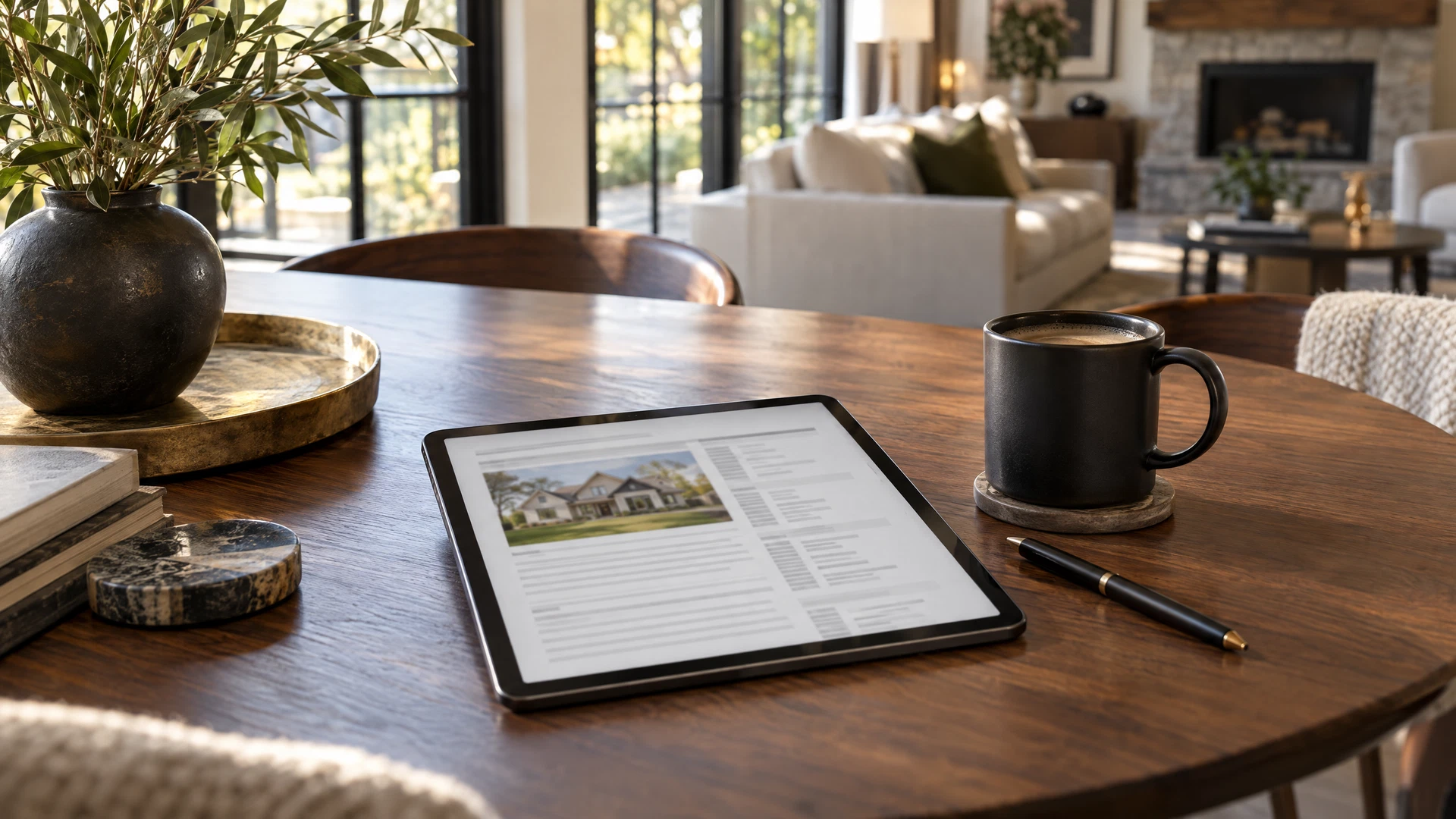
An inspection report can feel like a list of unfamiliar terms and photographs. It describes conditions observed on inspection day, not every future repair. Review the overview, then note questions.
Royal Home Inspections, LLC provides photo-rich reports with clear explanations, usually the same day. Lead inspector Derek schedules one home per day and reserves time to discuss findings.
Read the overview and findings
Begin with the summary page, when included, to see which systems need attention. Treat it as a guide, not a substitute for the full report. Read each item’s description, location, and recommendation. Details may explain why a condition matters or what remains uncertain.
Notice the difference between observation and recommendation. An observation tells what the inspector saw or tested; a recommendation suggests a next step. Some findings call for repair; others suggest monitoring or specialist review.
Connect photographs to written notes
Photographs connect an observation to a place in the home. Check captions, labels, or arrows, then compare the image with the stated location. A close-up may document one detail without showing its surroundings, so read the explanation before drawing conclusions. Flag unclear images for discussion.
Reports group findings by room or system. Read the section, including access notes, so related observations retain context. A thermal image or moisture reading can show a difference measured at that time; it cannot establish a hidden cause.
Discuss safety, priority, and next steps
Give safety-related observations prompt attention. Read what was observed, where, and whether correction or further assessment is recommended. Ask the inspector to explain the priority plainly. If diagnosis or repair needs specialized expertise, share the report section with a qualified professional.
Other notes may concern maintenance, aging components, or monitoring. Specialist review is not a confirmed diagnosis; it marks a question beyond what the inspection established. Ask what is known, what remains uncertain, and what evaluation could clarify it. Understand the finding before assigning urgency.
Keep scope and access in view
A home inspection is a visual evaluation of accessible systems at a particular time. Finished surfaces, belongings, locked areas, weather, or safety concerns can limit access. The report should identify components not inspected and explain why. No inspection can guarantee every defect will be found, especially when conditions are concealed or later change.
Royal checks safely accessible outlets, switches, windows, and doors, and evaluates accessible exposed gas joints when gas service is present. Concealed wiring or pipes are not opened. Thermal and moisture tools add observations but do not reveal hidden areas. Read access notes and ask whether a limitation leaves a question unanswered.
Use the client walkthrough
If possible, attend the end-of-inspection walkthrough. Derek encourages clients to review findings, ask questions, and connect report language with what was observed. Inspections typically take three to four hours, with five hours reserved. Bring unclear terms, photos, or recommendations to keep discussion focused.
Afterward, note any follow-up you want to pursue. Royal takes a buyer-first, no-pressure approach to optional services; recommendations explain choices, not push add-ons. For an item needing specialist input, ask who can assess it and what question to raise. The report supports follow-up; it does not promise a home's future condition.