Radon Testing Services in North Carolina
If you’re buying a home in North Carolina, having it tested for radon is strongly recommended. There are two main reasons to test for radon: health and financial protection. Radon is a naturally occurring radioactive gas and the second leading cause of lung cancer in the United States, even in homes that appear well-built and well-maintained.
Our radon testing services in North Carolina are designed specifically for real estate transactions and provide reliable results using 48-hour testing protocols. Testing is performed in accordance with North Carolina guidelines and EPA recommendations to ensure results are valid for real estate decision-making.
If elevated radon levels are found, mitigation is a proven and effective solution. In North Carolina, the average cost of radon mitigation is approximately $1,500, depending on the home’s layout and foundation type.
A Few Quick Facts About Radon
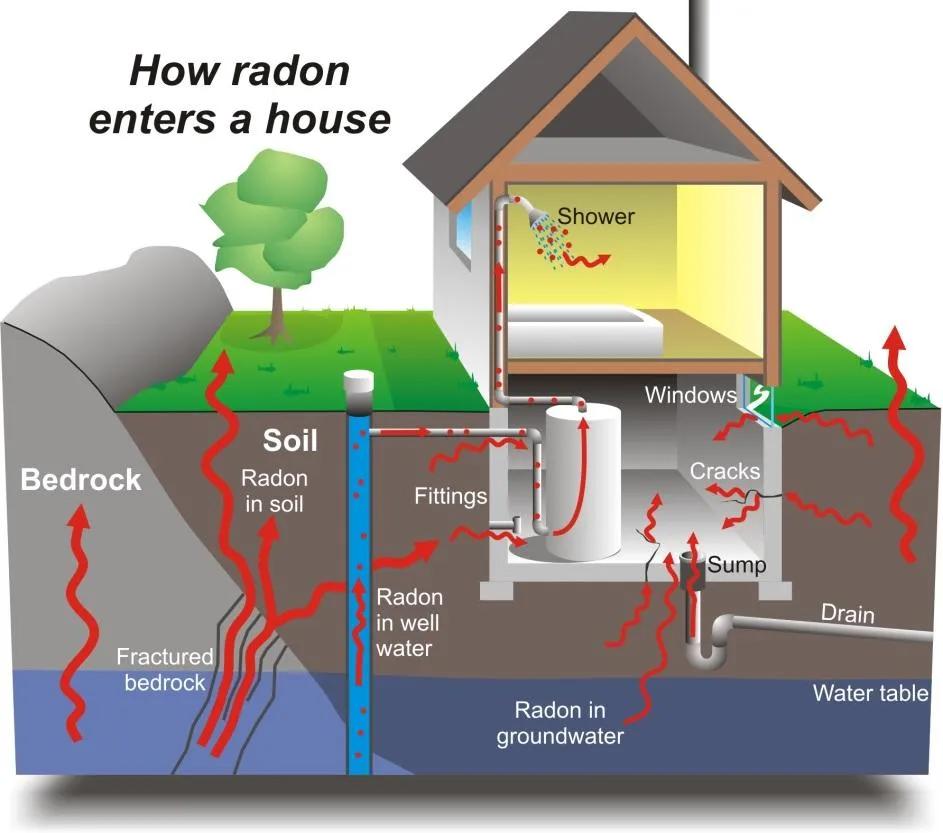
Radon is a naturally occurring gas formed by the breakdown of uranium in soil and rock, which is present throughout many areas of North Carolina.
Any home can have elevated radon levels, including brand-new construction and well-sealed homes.
Elevated radon levels are common in North Carolina, and testing is the only way to know a home’s radon level. Many homes test above the EPA action level.
Radon levels are unpredictable. Two homes built next to each other, at the same time, and with similar construction can have very different radon readings.
Radon gas is the number one cause of lung cancer among non-smokers, and the second leading cause of cancer in America. Radon testing is recommended by the EPA, the Surgeon General, the American Lung Association, and the Illinois Department of Public Health. The area most at risk in a home is the lowest level that gets lived in.
Money
When a radon test shows elevated levels during a real estate transaction, buyers in North Carolina often ask the seller to install or pay for a radon mitigation system. These systems are highly effective at reducing radon levels and typically cost under $1,500. If you skip radon testing during the purchase and test later as a homeowner, you lose the opportunity to negotiate mitigation costs with the seller.
Here’s a common scenario: you buy a home without testing for radon. Years later, when you go to sell, the new buyers perform a radon test and the results come back high. At that point, you’re the one paying for mitigation. This happens more often than people realize.
Objections to Radon Testing
We hear many objections to radon testing—some are understandable, others are misconceptions.
“The home doesn’t have a basement.”
While homes without basements often have lower radon levels, elevated radon can still be found in crawl spaces and slab-on-grade homes. Testing is the only way to know for sure.
“It’s new construction.”
New homes in North Carolina may include passive radon systems, but that doesn’t guarantee low radon levels. Passive systems reduce risk—they don’t eliminate it. Testing is still recommended.
“The home already has a mitigation system.”
If a mitigation system is properly installed and functioning, radon levels are typically low. Verifying performance with a radon test is still a smart move.
“I’m buying a bank-owned or short sale property.”
Even if the seller won’t pay for mitigation, knowing the radon level allows you to plan for future costs. A post-purchase DIY test is still a good idea.
“I’ll test it myself later.”
That’s fine, but it won’t help during the real estate transaction or negotiations.
“Radon isn’t a real concern.”
Regardless of opinions, radon is a recognized health risk and a real estate liability. Elevated radon levels can affect resale and negotiations, making testing a practical decision.
(980) 412-5959
Subscribe to our social

